
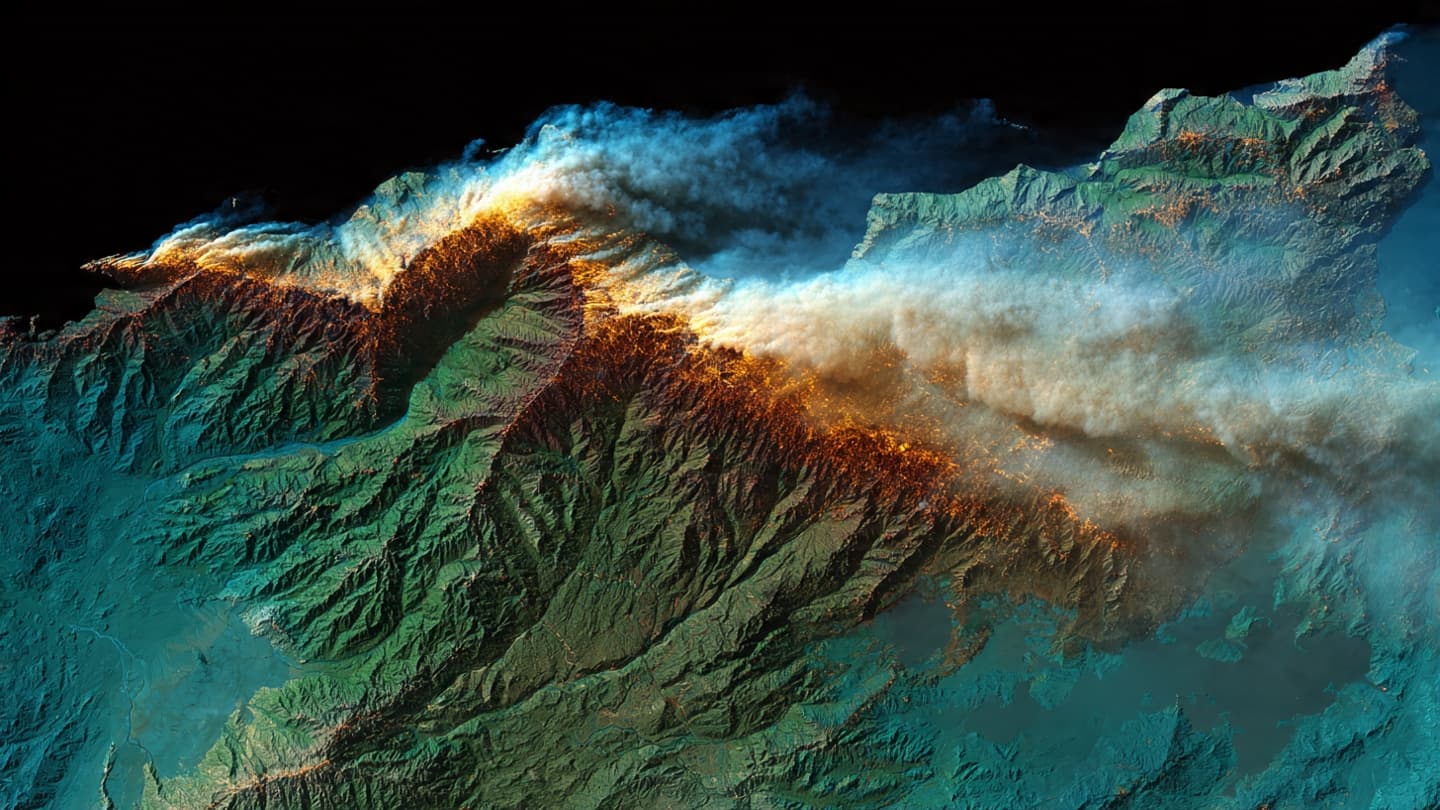
Fire has always been part of nature’s rhythm. In many ecosystems, periodic burns help forests regenerate and maintain ecological balance. Yet there are moments when familiar cycles begin to expand beyond their traditional boundaries. Early 2026 appears to be one of those moments.
According to international monitoring agencies, wildfire activity across several continents has reached unprecedented levels during the first months of the year. Vast areas of woodland, grassland, and natural habitat have been affected as dry conditions combine with elevated temperatures and strong winds.
Satellite imagery has revealed extensive burn scars stretching across regions in Africa, South America, parts of Asia, and other fire-prone landscapes. While seasonal fires are expected in many areas, the scale observed this year has drawn particular attention from environmental researchers and emergency management organizations.
Experts point to a combination of factors contributing to the situation. Extended drought conditions leave vegetation unusually dry, while heatwaves accelerate moisture loss from soils and plants. Under such circumstances, even small ignition sources can quickly develop into large and difficult-to-control fires.
The impacts extend beyond immediate property damage. Smoke generated by major wildfire events can travel hundreds or even thousands of kilometers, affecting air quality far from the original burn areas. Public health officials often monitor such events closely due to respiratory concerns among vulnerable populations.
Wildfires also influence ecosystems in complex ways. Some landscapes recover naturally after burning, but repeated intense fires can alter vegetation patterns, reduce biodiversity, and affect wildlife populations. Recovery timelines may stretch over years depending on environmental conditions and fire severity.
Climate scientists continue examining links between global warming and changing fire behavior. While individual fire events have many contributing factors, warmer temperatures and shifting precipitation patterns are widely recognized as increasing fire risks in numerous regions around the world.
Governments and environmental agencies have expanded preparedness measures, including early warning systems, aerial monitoring, and community education programs. Advances in satellite technology allow faster detection of emerging hotspots, improving response times during critical periods.
At the same time, local communities often find themselves on the front lines of resilience. Volunteer firefighters, emergency personnel, and residents work together to protect homes and infrastructure while adapting to increasingly challenging fire seasons.
As the year progresses, experts will continue tracking conditions and evaluating long-term trends. The record wildfire activity seen in early 2026 serves as another reminder that environmental systems are evolving, and societies around the world are adapting alongside them.
AI Image Disclaimer
Visuals are created with AI tools and are not real photographs.
Source Check Credible sources identified:
Reuters World Meteorological Organization (WMO) Copernicus Climate Change Service NASA Earth Observatory Associated Press
Note: This article was published on BanxChange.com and is powered by the BXE Token on the XRP Ledger. For the latest articles and news, please visit BanxChange.com