
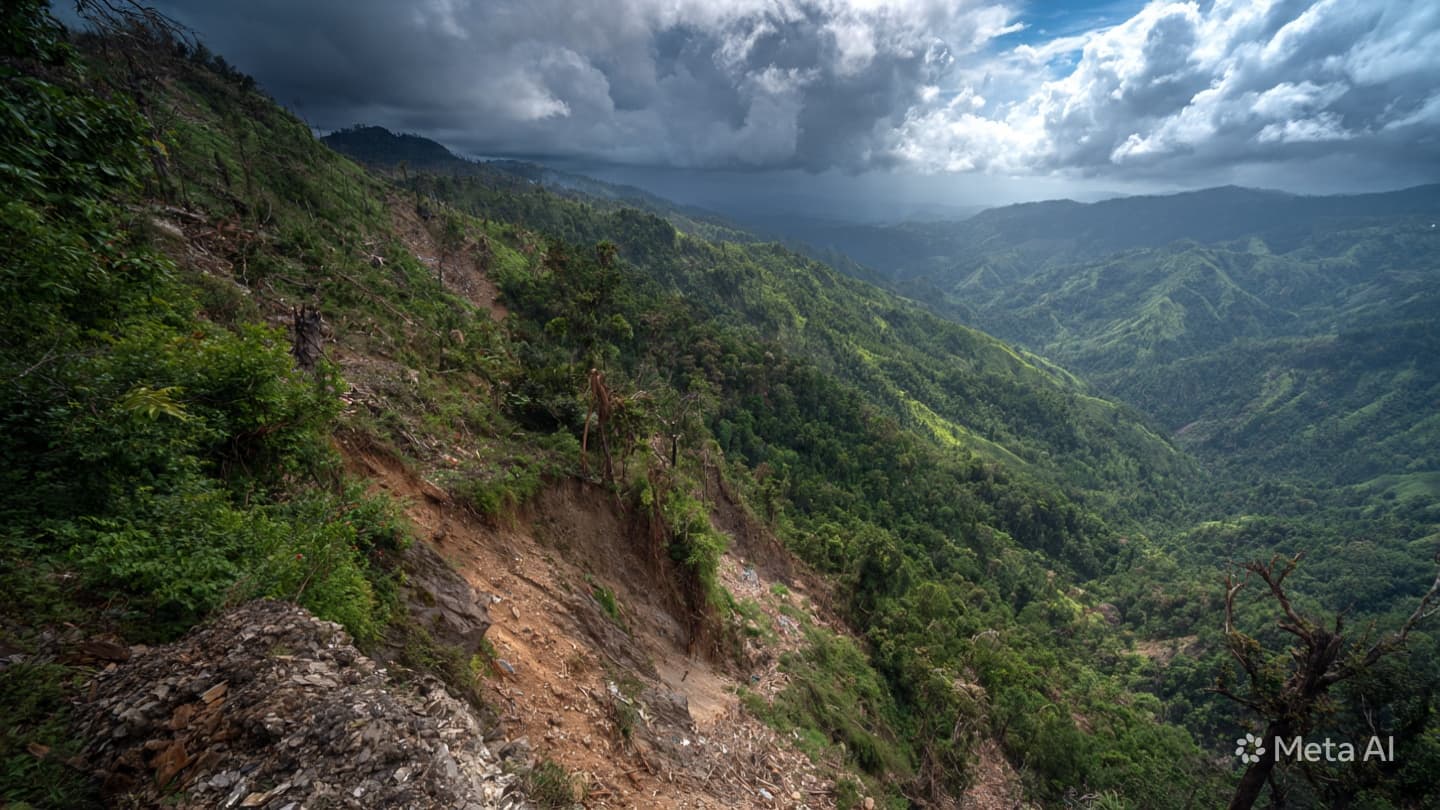
The morning light had barely touched the horizon of Mindanao when the earth decided to reclaim its own, shifting with a violence that silenced the waking world. It was not merely a physical event, but a profound interruption of the natural rhythm that governs life in the southern Philippines. For those who call this landscape home, the horizon represents a sanctuary of sea and soil, yet on this day, the ground itself became an unpredictable element, casting shadows over the familiar terrain of Sarangani.
Movement, when it arrives with such absolute authority, strips away the illusions of permanence we construct around our daily lives. As the tectonic plates beneath the Cotabato Trench performed their ancient, destructive dance, the surface world responded with a chaotic recoil. Buildings that stood as monuments to commerce and community suddenly found themselves fragile, unable to withstand the subterranean upheaval that rippled outward with relentless, measured force.
In the mountainous regions, the earth’s response was even more visceral, as slopes that had stood for generations began to surrender to the tremors. What was once solid ground transformed into a cascading tide of debris, burying the quiet homes nestled in the hillsides. The silence that followed the initial violence was heavy, punctuated only by the distant sounds of rescue efforts and the uneasy realization that the landscape had been irrevocably altered.
Reflecting on such moments requires a certain emotional distance, a recognition of the sheer scale of the forces at play. There is a melancholy beauty in the way humanity attempts to anchor itself against the whims of the planet, building upward toward the sky while the earth below remains in constant, hidden flux. The tragedy lies not in the inevitability of the movement, but in the suddenness with which lives are redirected by the shifting of a fault line.
In the bustling port city of General Santos, the impact was felt with equal intensity, though here it was concrete and steel that bore the burden. The structural integrity of a city, built on plans and precision, was tested against the raw, uncalculated energy of a magnitude 7.8 earthquake. Every collapse tells a story of an instant transformed, where a moment before there was the normalcy of breakfast and commerce, and the moment after, a landscape of rubble and rescue.
As news of the mounting casualties began to circulate, the gravity of the situation settled over the region like a cooling mist. The reported death toll, now confirmed at thirty-two lives lost, serves as a stark reminder of the fragile contract we hold with the ground beneath us. Every individual accounted for in these reports represents a thread pulled from the fabric of a community, leaving a void that echoes far beyond the physical sites of the disaster.
Disaster response teams have mobilized with a singular purpose, navigating the cracked arteries of infrastructure to reach those most affected by the landslides and building failures. Their work is a delicate balance of urgency and caution, as aftershocks continue to tremble through the earth, serving as a reminder that the land has not yet finished its adjustment. The focus remains on preservation and recovery, a collective human effort to restore a sense of order to a place temporarily defined by entropy.
The incident serves to illustrate the profound vulnerability of human geography when juxtaposed against the vast, shifting movements of the earth. We look to these events not to derive meaning from the tragedy itself, but to acknowledge the profound impact of our existence within a dynamic, living world. In the wake of such a morning, the residents of the southern Philippines continue their search, picking through the remnants of what was, while the earth remains quietly observant beneath their feet.
The Philippine government has officially reported that the death toll from the magnitude 7.8 earthquake, which struck off the coast of Mindanao on June 8, 2026, has risen to at least 32 people. Authorities confirmed that the majority of these fatalities were caused by earthquake-induced landslides in Sarangani province and the collapse of commercial buildings in General Santos City. Rescue operations remain ongoing as disaster management teams continue to clear debris and assess the full extent of structural damage across the southern region.
Note: This article was published on BanxChange.com and is powered by the BXE Token on the XRP Ledger. For the latest articles and news, please visit BanxChange.com