
The Tuscan countryside has long been understood through its relationship with time, where the slow maturation of the soil meets a sun that seems permanently fixed over rolling hills. On these agricultural lands, generations have worked in tandem with a landscape that feels inherently predictable, almost suspended in an eternal grace. Yet, beneath the peaceful rows of crops and orchards lies an ancient, restless anatomy, a network of geothermal veins that quietly pulse far beneath the reach of the plow. It is a reminder that the ground we walk upon is never truly stationary, but rather an active participant in an ongoing, subterranean dialogue.
When the shift occurred on June 9, 2026, it did not arrive with the thunderous roar of an awakening volcano, but with a sudden, invisible surge of pressure from the deep. A localized displacement of the earth's thermal currents forced a pocket of methane gas upward, breaching the surface with terrifying swiftness. For those working the soil in that quiet hour, there was no warning, no slow build-up to signal that the familiar earth was about to tear itself open. The resulting explosion shattered the morning calm, leaving behind a sudden, heavy silence over the scorched fields.
Five agricultural workers, whose daily rhythms were tied so intimately to the harvest, were lost to the sudden violence of the vents. Their tools, left scattered among the disrupted earth, remained as quiet testaments to a routine broken in a single, unyielding moment. The air, usually fragrant with warm grass and turned earth, carried the sharp, unnatural scent of deep-seated gases brought prematurely to the light. Neighbors and passing drivers looked out across a landscape that appeared identical to the day before, yet was fundamentally altered by the grief now settling into its valleys.
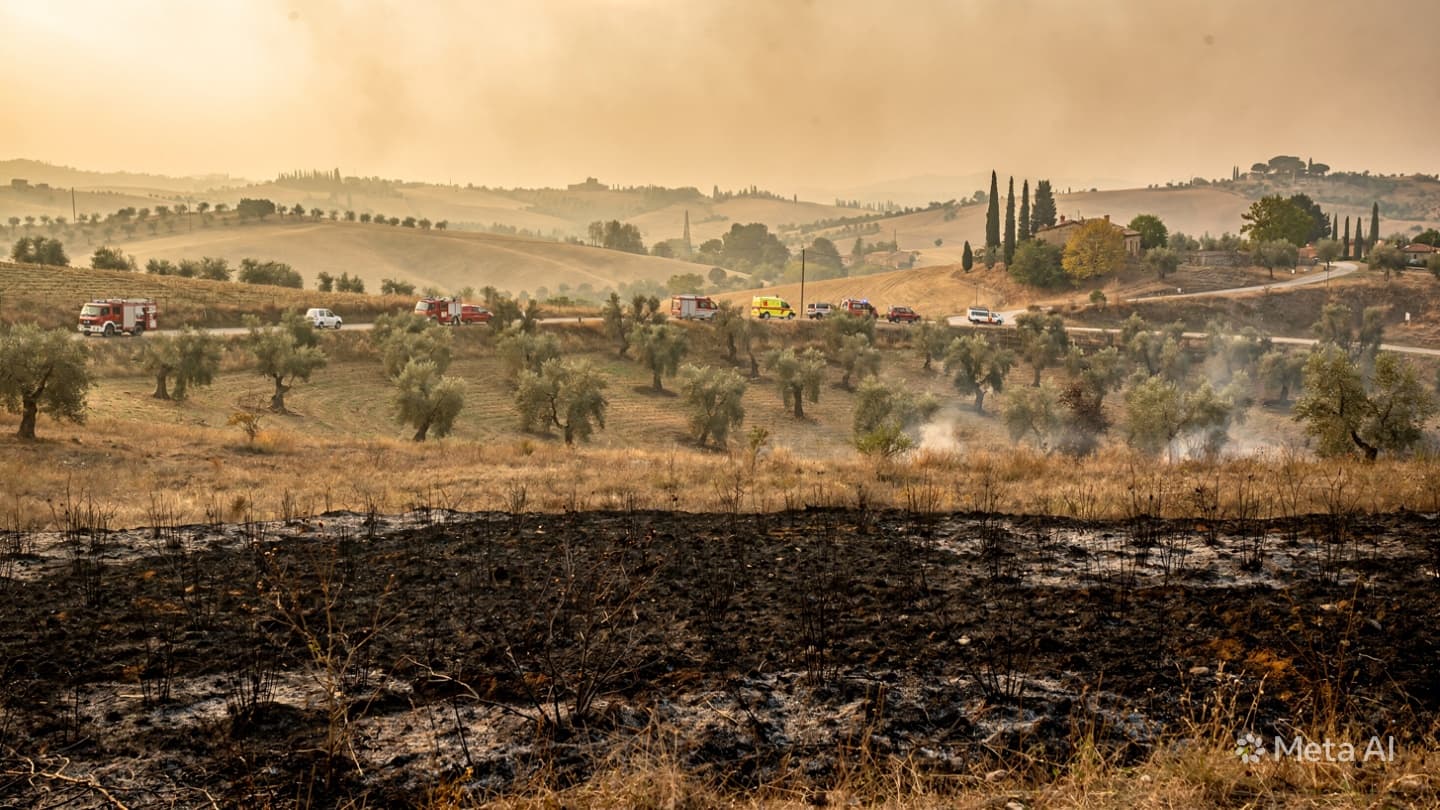
As emergency services arrived to secure the perimeter, the physical smoke began to clear, revealing the stark contrast between the bright summer sky and the blackened patch of farmland below. Geothermal experts quickly deployed monitoring equipment into the soil, seeking to understand the deep structural movements that initiated the fatal gas release. The instruments hummed quietly against the ground, tracing lines of pressure and temperature in an attempt to map an invisible, subterranean landscape. For the local community, however, the immediate concern was not the mechanics of the earth, but the empty chairs left behind.
In the small villages that border these agricultural tracts, the loss is felt with a quiet, communal weight that requires few words. Agriculture in this region is not merely an industry, but a shared lifestyle where neighbors watch each other’s fields and celebrate the same seasonal milestones. To have that continuity broken by an unpredictable geological anomaly brings a unique kind of vulnerability to those who remain. It highlights the silent, historical bargain struck by those who cultivate land shaped by geothermal activity, where fertility and danger often share the same root.
By afternoon, the immediate chaos had subsided into a structured recovery effort, with official vehicles lining the narrow gravel roads that cut through the valley. The fields stood still under the gathering heat, the dust raised by rescue teams slowly settling back onto the leaves of nearby vines. There was no grand rhetoric from the officials gathered at the scene, only the methodical movement of professionals documenting a rare and tragic convergence of natural forces. The hills, unchanged in their geometry, seemed to absorb the collective sorrow of the day, holding it within their long shadows.
As the sun began its slow descent, regional authorities confirmed the structural stabilization of the immediate area, assuring residents that the risk of a secondary venting had passed. The investigation into the precise mechanics of the thermal shift will continue for weeks, drawing on data from both local sensors and national geological institutes. For now, the focus remains on supporting the families of the deceased, whose lives were upended by an element as volatile as it is unseen.
The incident occurred during routine field operations, highlighting the unpredictable nature of subterranean gas pockets in geothermally active regions. Emergency crews from across the region remain on site to monitor emissions and ensure the safety of nearby agricultural communities. Local officials have expressed condolences to the families of the five victims, while technical teams analyze soil composition to prevent future occurrences.
Note: This article was published on BanxChange.com and is powered by the BXE Token on the XRP Ledger. For the latest articles and news, please visit BanxChange.com