
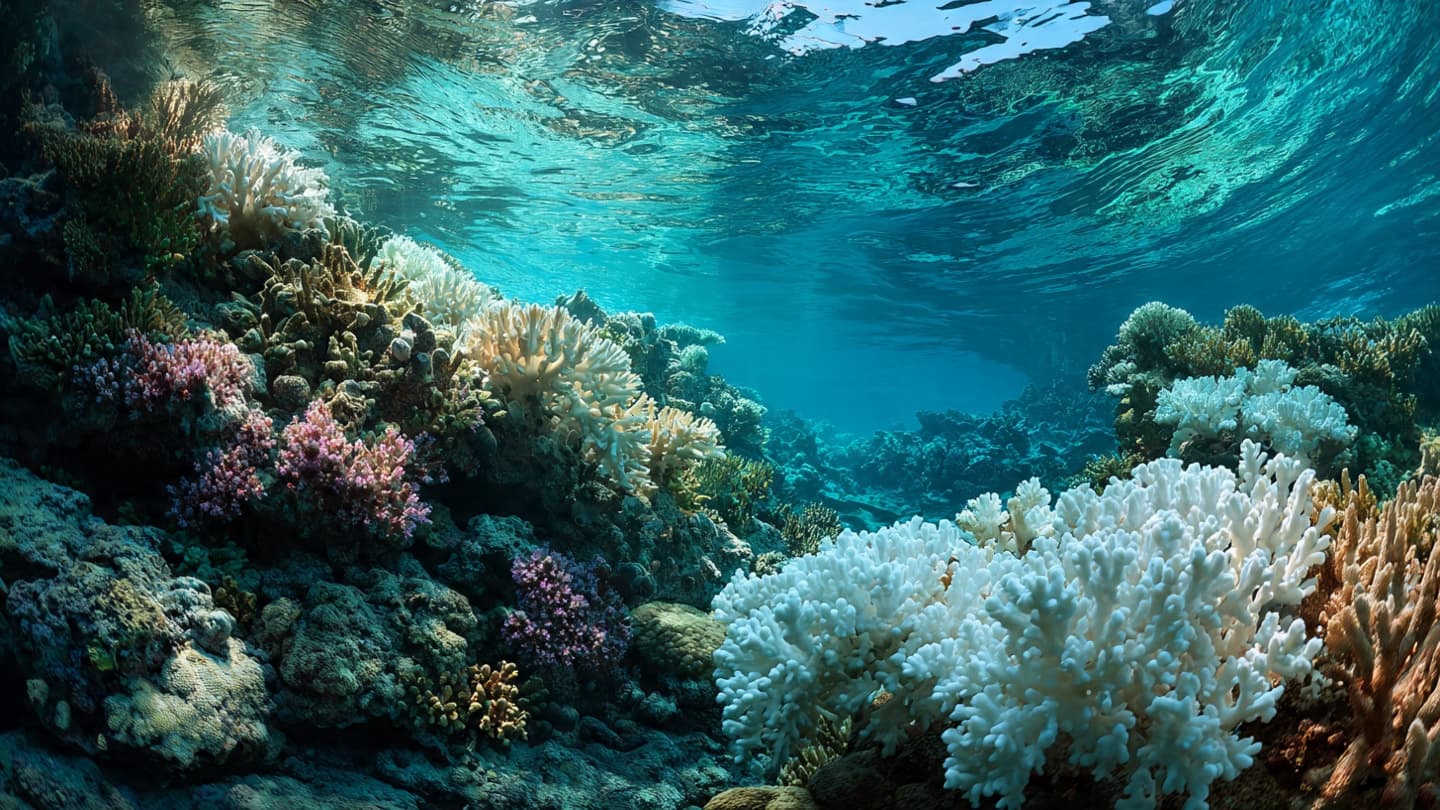
Far below the ocean’s surface lies a landscape often compared to an underwater city. Coral reefs stretch across tropical waters in intricate patterns, providing shelter, food, and protection to countless marine species. Their beauty has inspired generations, yet their future is increasingly uncertain.
Marine researchers report that rising ocean temperatures continue placing extraordinary stress on coral ecosystems around the world. Extended exposure to unusually warm water can trigger coral bleaching, a process that weakens reefs and reduces their ability to survive prolonged environmental pressure.
Corals depend on a delicate partnership with microscopic algae living within their tissues. These algae provide much of the energy corals need to thrive. When temperatures rise beyond normal levels, corals may expel the algae, causing their vibrant colors to fade and leaving them vulnerable.
Recent monitoring programs indicate that several reef systems are approaching conditions associated with significant ecological damage. Scientists stress that not all bleaching events result in permanent loss, but repeated episodes reduce recovery opportunities and increase long-term risks.
The significance of coral reefs extends far beyond their visual appeal. They support immense biodiversity, serving as habitats for fish, crustaceans, mollusks, and countless other marine organisms. Many coastal communities also depend on reef ecosystems for food security and tourism-related livelihoods.
Coral reefs contribute to coastal protection as well. By absorbing wave energy, reef structures help reduce erosion and limit storm impacts along shorelines. Their decline may leave some coastal areas more exposed to natural hazards in the future.
Researchers are exploring a range of conservation approaches. Marine protected areas, coral restoration projects, and efforts to improve water quality all aim to strengthen reef resilience. Scientists are also studying coral species that appear more tolerant of warmer conditions.
Advances in monitoring technology allow experts to track reef health with greater precision. Satellite observations, underwater sensors, and drone-based surveys provide valuable data about changing environmental conditions and ecosystem responses.
The story of coral reefs is ultimately tied to the broader story of the oceans themselves. Water temperatures, currents, weather patterns, and marine biodiversity remain interconnected parts of a complex planetary system. Changes affecting one element often ripple through many others.
For now, scientists continue documenting reef conditions while conservation initiatives expand worldwide. Although challenges remain substantial, ongoing research and restoration efforts provide opportunities to better understand and protect some of the ocean’s most remarkable ecosystems.
AI Image Disclaimer
Images in this article are AI-generated illustrations, meant for concept only.
Source Check Credible sources identified:
Reuters National Oceanic and Atmospheric Administration (NOAA) International Coral Reef Initiative (ICRI) UNESCO Nature Climate Change
Note: This article was published on BanxChange.com and is powered by the BXE Token on the XRP Ledger. For the latest articles and news, please visit BanxChange.com