
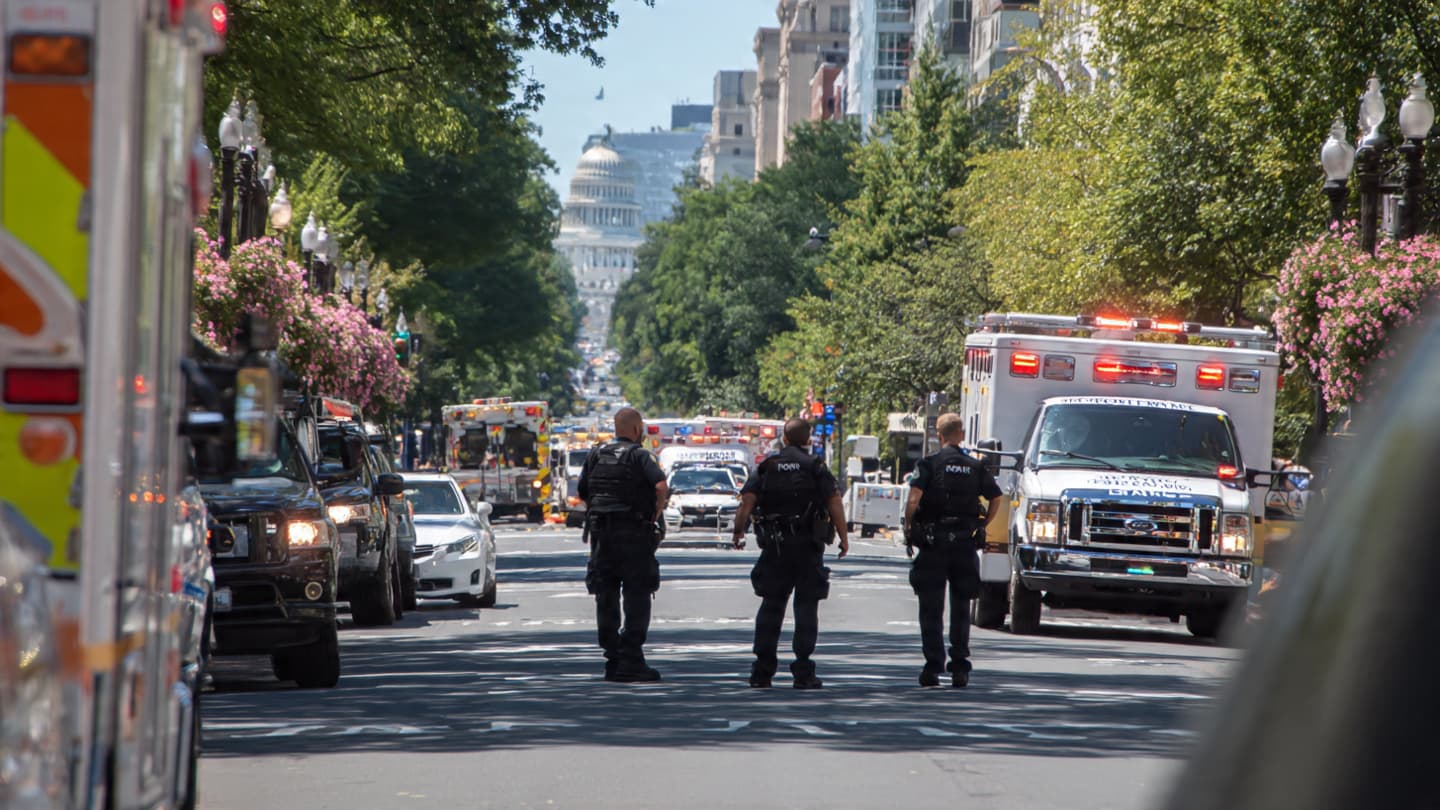
The streets surrounding major government buildings often appear calm beneath the routines of official life, where tourists, staff members, and security personnel move through carefully guarded spaces. Yet within those layers of order, moments of sudden violence can transform familiar landmarks into scenes of alarm and investigation. Near the White House in Washington, D.C., a gunman was reportedly shot and killed by Secret Service agents following a security incident that quickly drew national attention.
According to law enforcement reports, Secret Service personnel responded after an armed individual approached a restricted area near the White House. Authorities stated that agents confronted the suspect before shots were fired, resulting in the gunman’s death. Emergency responders and security teams immediately secured the surrounding area while investigations began.
Officials indicated that the incident unfolded rapidly, with agents acting under established protective protocols designed to respond to perceived threats against protected sites and individuals. Security perimeters around the White House are among the most heavily monitored in the United States, involving multiple federal agencies and layered surveillance systems.
Witnesses in the area described hearing sudden gunfire followed by the arrival of additional emergency vehicles and law enforcement personnel. Portions of nearby streets were temporarily closed as investigators examined the scene and gathered evidence connected to the incident.
The United States Secret Service, tasked with protecting the president and key federal locations, has historically maintained strict response procedures in situations involving armed threats. Experts noted that agents are trained to react quickly when potential dangers emerge near protected zones, particularly around high-security government facilities.
Public attention surrounding such incidents often reflects broader national concerns about political violence and public safety. In recent years, security agencies across the country have faced heightened pressure to address threats targeting government institutions, elected officials, and public spaces.
Authorities had not immediately released extensive details regarding the suspect’s identity or possible motives during the initial stages of the investigation. Law enforcement officials emphasized that determining the full circumstances surrounding the encounter would require forensic review, witness interviews, and coordination between federal agencies.
The White House itself has experienced several security incidents throughout modern history, leading to evolving protective measures and expanded surveillance capabilities. Each event tends to prompt renewed discussion about balancing public accessibility with increasingly complex security challenges in the nation’s capital.
As investigations continued, federal officials urged the public to rely on verified information released through official channels. The incident remained under active review while security operations around the White House returned gradually to normal conditions.
AI Image Disclaimer: Some visual elements used with this article were generated using AI technology for illustrative newsroom presentation.
Sources: CNN, Reuters, The Washington Post, Associated Press
Note: This article was published on BanxChange.com and is powered by the BXE Token on the XRP Ledger. For the latest articles and news, please visit BanxChange.com