
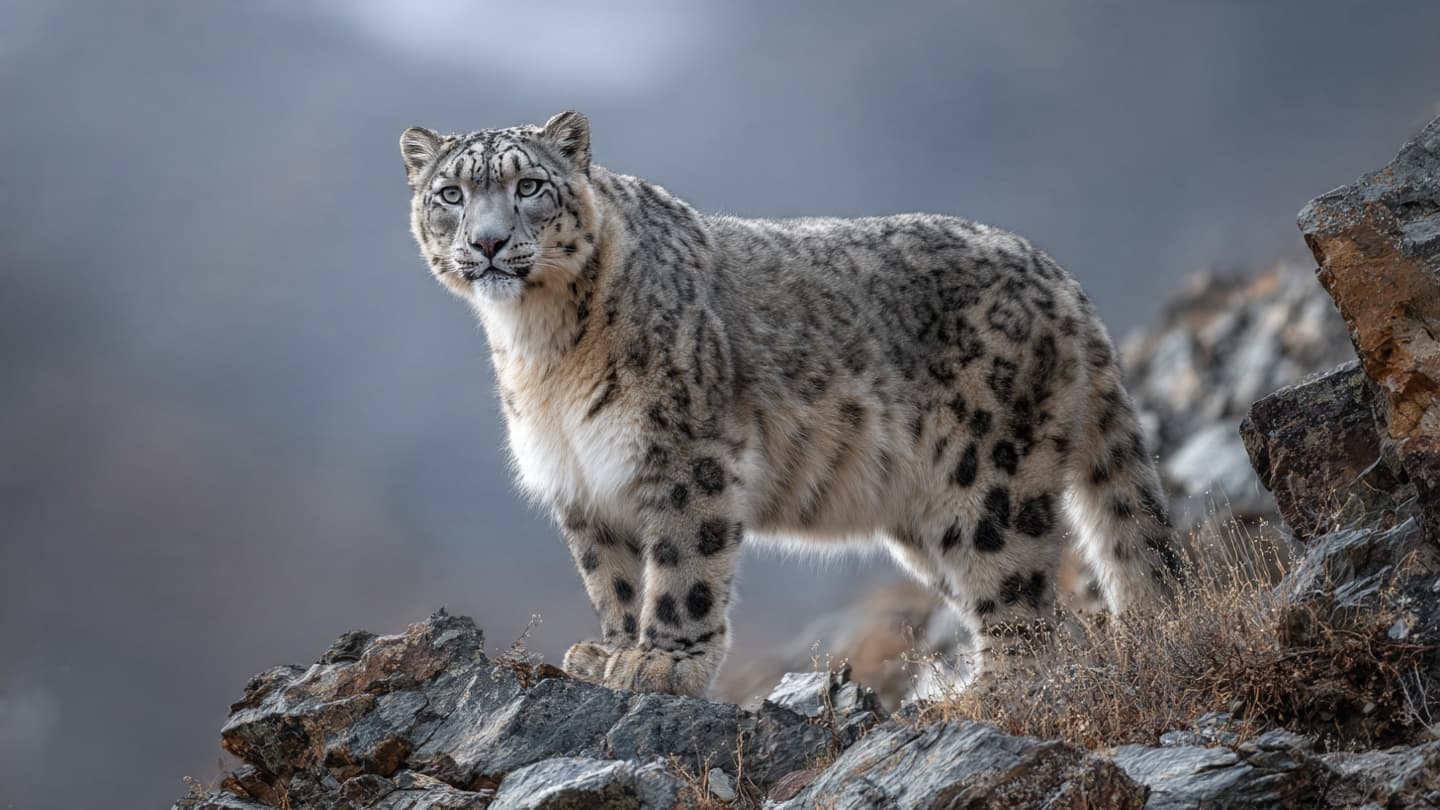
Some animals become symbols not because they are often seen, but because they remain hidden. The snow leopard, often called the “ghost of the mountains,” inhabits some of the world’s most remote and rugged landscapes. Observing one in the wild remains a rare and memorable experience.
Recent conservation assessments indicate encouraging signs for snow leopard populations in several regions of Central Asia. Researchers report evidence suggesting that protection measures implemented over recent years may be contributing to population stability and localized growth.
Snow leopards face numerous challenges, including habitat fragmentation, declining prey availability, and human-wildlife conflict. Conservation organizations have worked closely with local communities to address these issues through education, monitoring, and sustainable land-management initiatives.
Advances in wildlife tracking technology have improved population assessments. Motion-sensitive cameras, satellite tracking systems, and genetic analysis techniques allow researchers to gather more reliable information about elusive species living in difficult-to-access environments.
Mountain ecosystems support a rich variety of wildlife, and snow leopards occupy an important role as apex predators. Their presence helps maintain ecological balance by influencing prey populations and broader ecosystem dynamics.
Conservation programs increasingly emphasize community involvement. Residents living near snow leopard habitats often participate in monitoring efforts, livestock protection projects, and eco-tourism initiatives designed to support both conservation and local livelihoods.
Researchers caution that positive trends do not eliminate long-term risks. Climate change, infrastructure development, and habitat pressures continue influencing mountain ecosystems throughout the species’ range. Sustained conservation efforts remain necessary to protect future populations.
The snow leopard's recovery story reflects broader lessons about environmental stewardship. Effective conservation frequently combines scientific research, policy support, local engagement, and international cooperation over extended periods.
Public awareness has also contributed to growing support for wildlife protection. Educational campaigns and conservation partnerships have helped draw attention to species that might otherwise remain overlooked due to their remote habitats.
For now, evidence of recovery provides a welcome reminder that conservation efforts can produce meaningful results. Across the mountains of Central Asia, the snow leopard continues its quiet journey through landscapes where resilience and survival remain closely intertwined.
AI Image Disclaimer
Graphics are AI-generated and intended for representation, not reality.
Source Check Credible sources identified:
Reuters World Wildlife Fund (WWF) Snow Leopard Trust International Union for Conservation of Nature (IUCN) National Geographic
Note: This article was published on BanxChange.com and is powered by the BXE Token on the XRP Ledger. For the latest articles and news, please visit BanxChange.com