
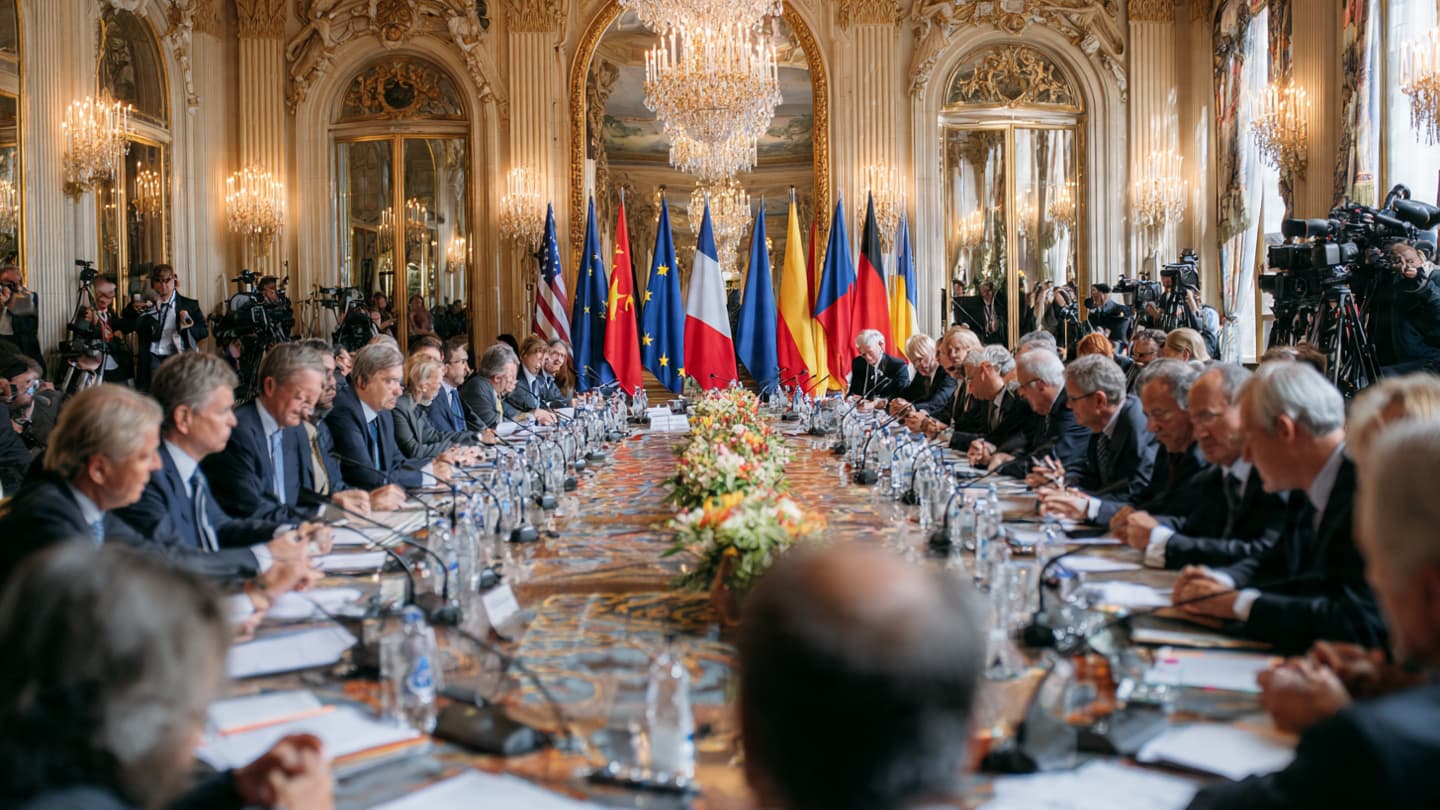
Wars often leave behind more than damaged cities and disrupted lives. They create distances between nations, leaders, and societies that can seem impossible to cross. Yet throughout history, some of the most significant turning points have begun not on battlefields but around negotiating tables. That possibility has once again entered international discussion following proposals for direct talks between Russia and Ukraine.
French President Emmanuel Macron has welcomed the idea of a face-to-face meeting between the leaders of the two countries. While acknowledging the challenges involved, he emphasized the importance of maintaining diplomatic channels even during periods of intense conflict. For many observers, the statement reflects France's continuing commitment to dialogue as a tool of international diplomacy.
The conflict has remained one of the defining geopolitical crises of recent years. Its consequences have extended far beyond the immediate region, influencing global markets, energy supplies, security planning, and international alliances. As a result, any potential movement toward negotiations attracts worldwide attention.
Supporters of direct talks argue that meaningful progress often requires leaders themselves to engage in discussion. While technical negotiations and diplomatic exchanges remain important, high-level meetings can create opportunities for breakthroughs that are difficult to achieve through indirect communication alone.
Skeptics, however, note that significant obstacles remain. Deep disagreements continue regarding territorial issues, security guarantees, and the conditions necessary for lasting peace. Previous negotiation efforts have faced setbacks, highlighting the complexity of the conflict.
Despite these challenges, many governments continue encouraging diplomatic engagement. The reasoning is straightforward: even limited communication can help reduce misunderstandings and create pathways toward broader agreements. Diplomacy is rarely a quick solution, but it often provides alternatives to prolonged confrontation.
France has consistently supported efforts aimed at preserving dialogue throughout the conflict. Macron's response to the proposal aligns with that broader approach, emphasizing the importance of exploring opportunities for peaceful resolution whenever they arise.
International reactions have been measured but attentive. Policymakers across Europe and beyond recognize that any direct meeting would carry symbolic as well as practical significance. Even preliminary discussions could influence future diplomatic calculations and regional stability.
Whether such a meeting ultimately takes place remains uncertain. Diplomatic initiatives often evolve gradually, shaped by changing circumstances and ongoing negotiations. Nevertheless, the proposal itself has generated renewed conversation about possible avenues toward de-escalation.
For now, the prospect of dialogue serves as a reminder that diplomacy remains an essential part of international relations. The path toward peace may be long and difficult, but history has repeatedly shown that conversations can sometimes begin where conflicts appear impossible to end.
AI Image Disclaimer
Illustrations were produced with AI and serve as conceptual depictions.
Sources
Reuters, Associated Press, Le Monde, France 24, BBC
Note: This article was published on BanxChange.com and is powered by the BXE Token on the XRP Ledger. For the latest articles and news, please visit BanxChange.com