
The broad river systems of the southern delta have long been celebrated as the vital arteries of regional life, where the water dictates the rhythm of both agriculture and commerce. In the bustling riverside markets that line the muddy banks, daily life moves to an ancient, waterborne cadence defined by the loading of wooden sampans and the trading of vibrant tropical produce. Residents build their homes and stalls directly over the water on slender timber pylons, trusting the high clay banks to remain resolute through the changing of the seasons. There is a sense of enduring security in these floating communities, where families have watched the currents from their open storefronts for generations.
The transition from a vibrant morning of commerce to a state of sudden, catastrophic failure occurred with an unsettling absence of dramatic warning, long before the midday heat had settled over the market. Deep beneath the waterline, the persistent, invisible scouring of the seasonal currents had spent months carving out the delicate foundations of the silt-heavy bank. Without any audible shifting of the timber structures, a massive section of the riverfront land simply liquefied, sliding directly into the deep, fast-moving channel of the river. The market stalls, filled with merchants and shoppers exchanging goods, were instantly pulled into the brown vortex as the earth beneath them vanished.
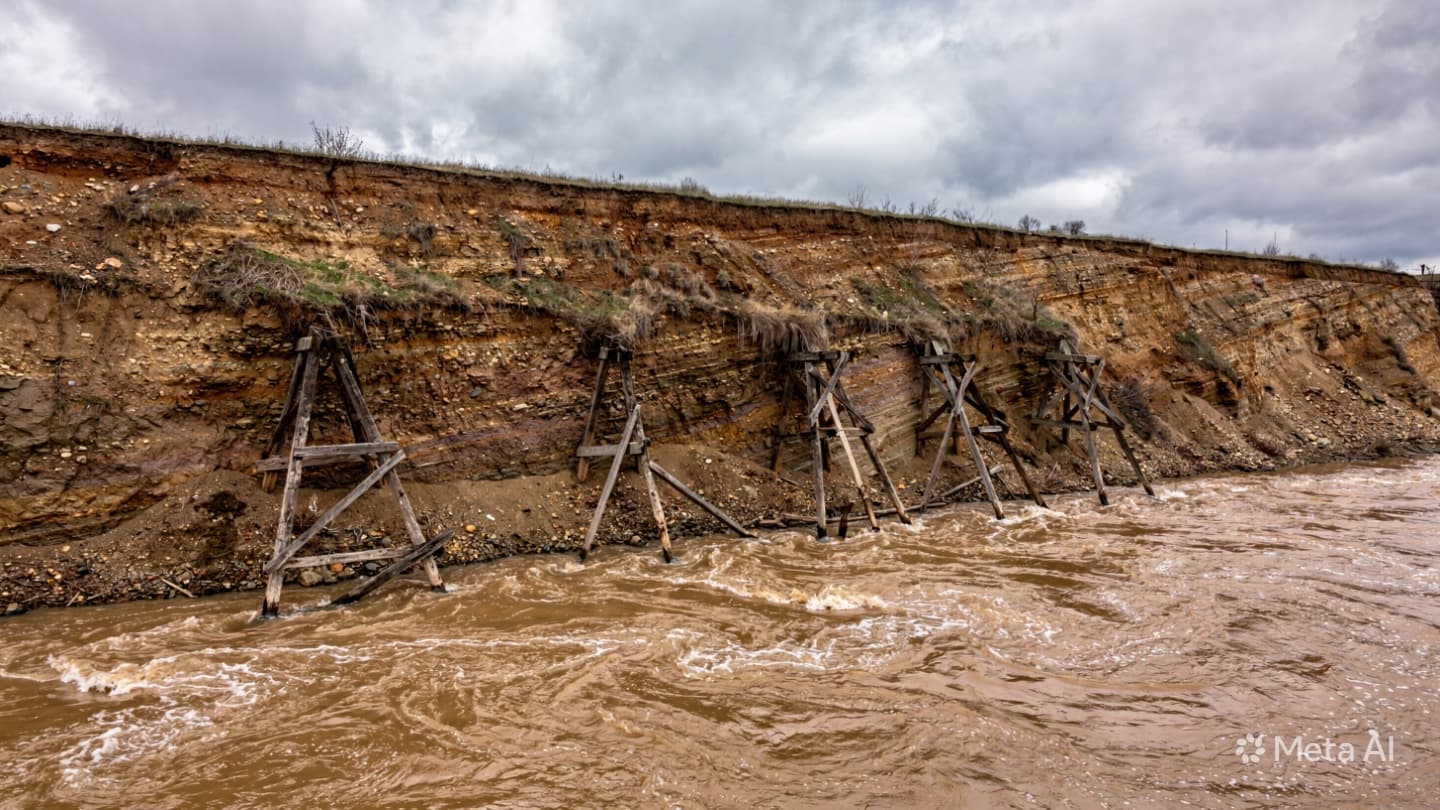
The physical reality of the event left the immediate neighborhood in a state of profound shock as the muddy water quickly closed over the collapsed structures and scattered wares. Where a bustling walkway and rows of colorful family businesses had stood only minutes before, there now existed a raw, vertical scar in the red clay bank, with severed supports dangling over the current. Baskets of fruit, overturned wooden tables, and plastic tarps drifted downstream, caught in the relentless pull of the river as it moved toward the sea. It was a stark, visual demonstration of how quickly the domestic spaces of the delta can be reclaimed by the natural hydrology of the region.
A heavy, solemn silence has settled over the riverside district as the focus of the operation shifts from initial chaos to the methodical work of recovery. The tragic loss of eight individuals within the sudden collapse of the market has left an enduring scar on the collective memory of a community where everyone is bound by the river. This grief is felt not in the loud pronouncements of distant administrative centers, but in the small gatherings at the edge of the police tape and the low, hushed tones of fishermen scanning the downstream eddies. The suddenness of the extraction has left neighbors staring blankly at the empty water where their friends' lives were centered.
Local divers and emergency personnel have deployed small boats along the river corridor, using nets and specialized sonar equipment to navigate the deep, opaque currents where the debris settled. The work near the fractured bank remains highly precarious, as the remaining sections of the clay cliff continue to show signs of instability, threatening secondary slides. Every piece of submerged timber retrieved is a slow, calculated movement, performed with a quiet reverence for those who were caught in the sudden subsidence of the morning.
The final communiqués from the provincial disaster management center confirm that emergency teams have recovered eight bodies from the river following the extensive collapse of the market platform. Structural engineers have ordered the immediate closure of adjacent riverfront structures and the relocation of twenty families as a precautionary measure while the structural integrity of the bank is assessed. Municipal authorities are working to establish temporary trading zones in elevated inland sectors to assist the surviving merchants who lost their livelihoods in the morning's sudden hydrological event.
Note: This article was published on BanxChange.com and is powered by the BXE Token on the XRP Ledger. For the latest articles and news, please visit BanxChange.com