
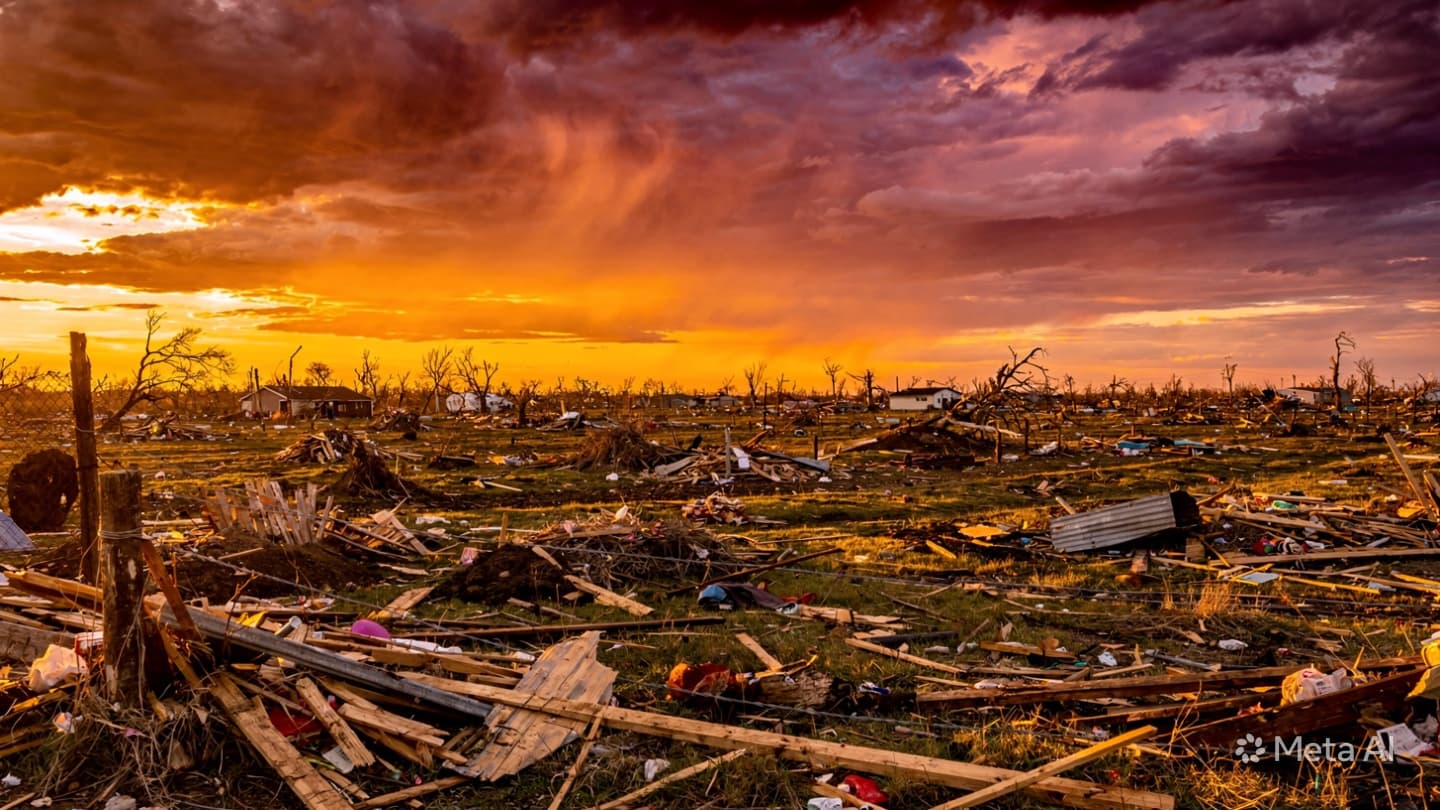
The wide expanses of the American heartland have long been defined by their horizontal majesty, places where the agricultural grid stretches uninterrupted to meet an open, expressive sky. In these historic farming communities, the homestead stands as a quiet monument to generations of labor, surrounded by mature windbreaks, weathered barns, and fields of young grain. Residents grow accustomed to the dramatic theatricality of the spring weather, watching the massive convective systems roll across the prairie with a mixture of respect and familiar caution. Yet, there are rare afternoons when the atmosphere thickens into a state of extreme volatility, turning a familiar landscape into a theater of unmitigated atmospheric force.
The transition from a humid summer afternoon to a state of acute meteorological danger occurred with an unsettling rapidity as a line of supercell storms organized along a shifting frontal boundary. The western horizon darkened into an unnatural, bruised green-black, casting a premature twilight over the gravel roads and neat rows of outbuildings. The wind, which had been blowing steadily from the south, suddenly dropped into a complete, breathless silence—a brief absence of motion that veterans of the plains recognize as the ultimate warning. Within this suspended space, the immense rotational energy of the upper atmosphere began to reach downward, anchoring a massive, mile-wide vortex directly to the rich topsoil.
Moving across the open fields with a fluid, terrifying velocity, the violent tornado followed an erratic trajectory that brought it into direct contact with several historic farmsteads. The sheer mechanical force of the winds, exceeding all structural thresholds, dismantled heavy timber barns, metal silos, and modern dwellings with an indifferent ease. The air became a chaotic matrix of pulverized wood, insulation, and the debris of rural life, spinning upward into the dark columns of the convective cloud. For those seeking shelter within basement stairwells and interior rooms, the experience was defined by an overwhelming, deafening roar that vibrated through the deep foundations of the earth.
A heavy, somber stillness has descended over the township as the storm cells finally moved eastward, leaving the landscape illuminated by the pale, amber light of sunset. Where proud groves of trees and tidy homesteads had framed the horizon for a century, there now existed a stark, flattened corridor of splintered lumber and scattered household possessions. Neighbors emerged cautiously from their underground sanctuaries, their attention drawn to the columns of flashing emergency lights beginning to navigate the debris-strewn country lanes. It is in these initial, unscripted hours of a disaster that the profound resilience of the rural community becomes visible, expressed through quiet coordination amidst the ruins.
The work of the first responders and local utility crews proceeded with a subdued precision through the night, their flashlights illuminating the pale dust that hung suspended over the fields. Every fragment of ruined structure required careful clearing to ensure paths were safe for emergency vehicles and to check on the welfare of isolated households. Five individuals were eventually confirmed to have perished within the direct path of the vortex, their lives concluding in the very spaces they had cultivated with care over decades. The local fire station was converted into a temporary command post, where hushed conversations replaced the usual community chatter.
The official bulletins published by the federal emergency management authorities confirm that five fatalities have been verified along the violent tornado track that leveled multiple rural properties. Structural assessment teams and weather specialists are currently surveying the corridor to document the precise damage indicators and determine the peak wind velocities achieved during the storm's lifespan. Emergency housing resources and regional support networks have been activated to assist the displaced families who lost their homes and livelihoods in the afternoon’s sudden meteorological event.
Note: This article was published on BanxChange.com and is powered by the BXE Token on the XRP Ledger. For the latest articles and news, please visit BanxChange.com