
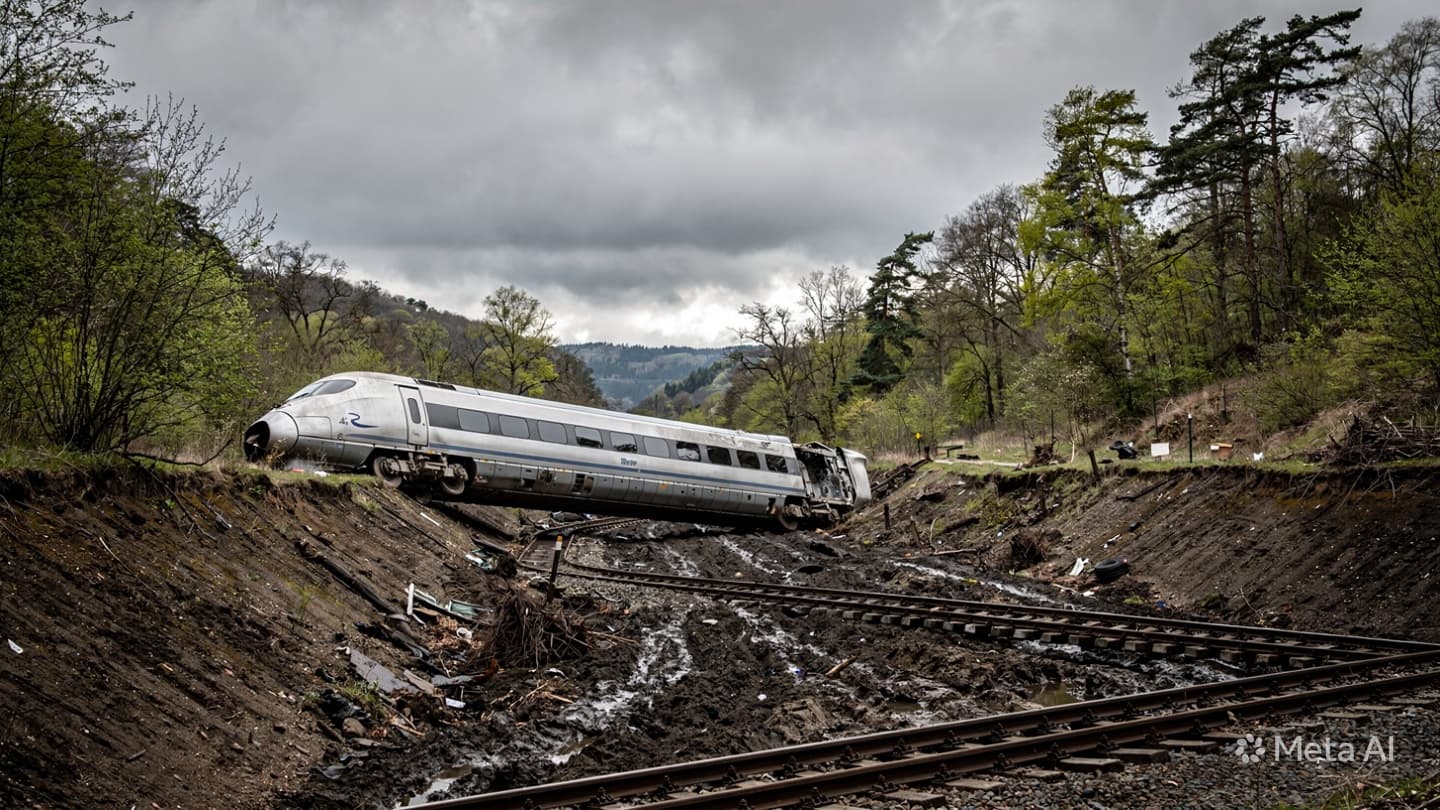
The modern high-speed rail line is an emblem of seamless transition, a silver thread cutting through the dense forests and structured fields of the German countryside. Passengers look out of panoramic windows at a blurred world, insulated from the friction of geography by advanced engineering and precise timetables. Within these sleek carriages, travel feels less like a physical displacement and more like a quiet interlude between two distinct realities. It is an environment where safety is assumed, woven into the very rhythm of the hum against the tracks.
On the afternoon of June 9, 2026, that rhythm was abruptly fractured on a stretch of high-speed track that cuts through a quiet, wooded valley. A commercial passenger train, traveling at its standard cruising velocity, left the rails in a violent deviation that defied the orderly architecture of the network. The sudden deceleration tore through the length of the train, transforming a space of quiet contemplation into one of immediate, chaotic momentum. Within moments, the sleek metal geometry of the carriages lay twisted against the embankment, surrounded by splintered trees and disturbed earth.
The silence that followed the crash was heavy, broken only by the settling of dust and the distant, rising sirens of emergency response teams. Inside the wreckage, thirty-one lives were brought to a sudden, permanent halt, their journeys concluded far from the platforms where they were expected. For those who survived, the transition from the sterile comfort of a modern train cabin to the raw reality of a disaster scene was instantaneous and disorienting. The surrounding woods, usually a pleasant backdrop for commuters, became a complex barrier for rescue efforts.
Helicopters soon circled overhead, their rotors cutting the air above the canopy as medical teams descended into the valley to establish a field triage station. Heavy machinery was brought to the perimeter of the forest, its engines roaring against the natural quiet of the rural landscape as workers sought to access the overturned cars. The scale of the derailment presented immediate logistical challenges, requiring a coordinated effort from multiple regional municipalities. Every movement was deliberate, a quiet exercise in order brought to bear against a scene of profound displacement.
As evening began to approach, the site took on the grim appearance of a prolonged recovery operation, illuminated by the stark glare of portable floodlights. The contrasts were sharp: the bright, high-tech paint of the locomotive stood ruined against the dark green of the pines and the grey mud of the ballast. Investigators walked the tracks with meticulous care, examining the rails and the undercarriage components for any sign of material failure or external interference. Every fragment of steel was treated as a piece of a larger, tragic puzzle that needed solving.
In nearby transit hubs, boards listed delays and cancellations, a subtle ripple effect that disrupted the schedules of thousands of travelers across the country. Yet, the true weight of the event was felt not in the logistical delays, but in the waiting rooms where families gathered to seek news of their loved ones. The collective anxiety of those moments was palpable, a quiet tension that filled the modern, glass-fronted stations with a somber atmosphere. It was a reminder of how deeply our daily lives are intertwined with the networks that carry us.
By nightfall, the focus shifted from immediate rescue to the delicate task of recovering those who perished in the impact. The voices of the workers were low, carrying across the damp evening air as they labored beneath the trees to clear the line. There were no immediate pronouncements regarding fault or systemic vulnerability, only the quiet recognition of a terrible event that had shaken the foundational confidence of national transit. The valley returned to a kind of stillness, though one forever altered by the day's events.
The high-speed derailment resulted in thirty-one confirmed fatalities, making it one of the most severe rail incidents in the country's recent history. Federal railway investigators have recovered the train’s data recorders and are analyzing track conditions to determine the precise cause of the technical failure. Emergency operations are expected to continue through the night to clear the line and restore regional transit infrastructure.
Note: This article was published on BanxChange.com and is powered by the BXE Token on the XRP Ledger. For the latest articles and news, please visit BanxChange.com