
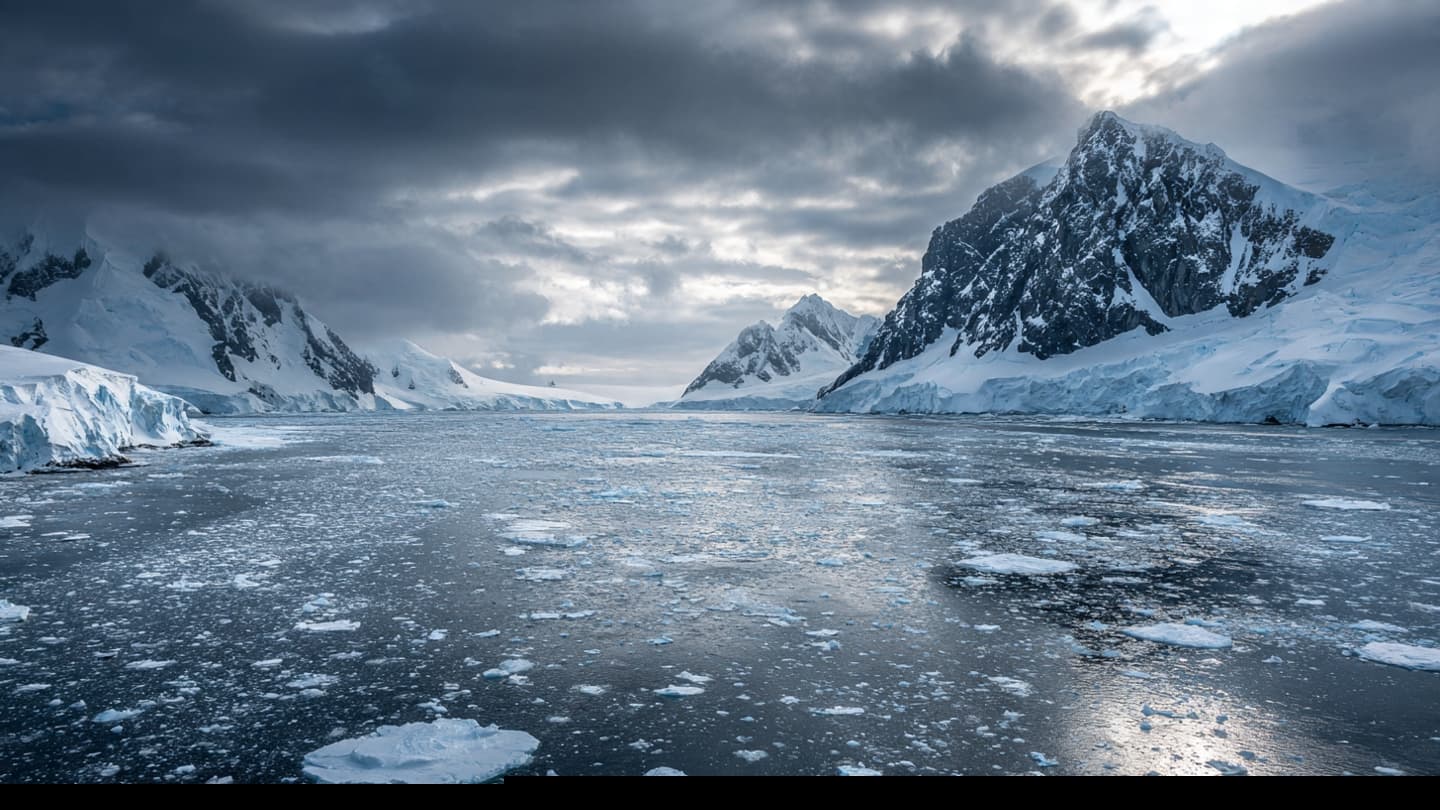
Antarctica often feels distant from everyday life. Surrounded by vast oceans and shaped by extreme conditions, it exists in the public imagination as a realm of ice, wind, and isolation. Yet what happens there can carry significance far beyond its frozen shores.
Scientists have observed unusually low sea ice coverage around parts of Antarctica in recent years. Although natural variability remains an important factor, recent measurements have prompted renewed scientific interest in understanding long-term trends across the Southern Ocean.
Sea ice differs from glaciers and ice sheets. It forms when ocean water freezes and expands seasonally before partially melting again. These cycles play an essential role in regulating heat exchange between ocean and atmosphere while supporting unique polar ecosystems.
Researchers note that sea ice provides habitat for numerous species, including krill, penguins, seals, and other marine organisms. Changes in ice extent can influence food availability and migration patterns throughout the Antarctic ecosystem.
The decline in sea ice also affects how sunlight interacts with the planet. Bright ice surfaces reflect significant amounts of solar energy back into space. When ice coverage decreases, darker ocean water absorbs more heat, potentially influencing regional climate conditions.
Scientists are investigating the factors contributing to recent observations. Ocean temperatures, atmospheric circulation patterns, wind behavior, and broader climate variability all interact within a complex environmental system. Understanding these relationships requires extensive data collection and analysis.
International research teams continue operating monitoring stations, research vessels, and satellite observation programs throughout the region. These efforts generate valuable information about sea ice dynamics and their implications for global climate understanding.
Beyond Antarctica itself, polar changes can influence weather and ocean systems that extend into lower latitudes. While scientists continue evaluating the extent of such connections, the region remains an important component of Earth’s environmental balance.
Public interest in polar science has grown alongside awareness of climate-related issues. Antarctica serves as both a natural laboratory and an environmental indicator, offering insights into processes that unfold across decades and centuries.
For now, researchers emphasize continued observation rather than immediate conclusions. The decline in Antarctic sea ice represents an important scientific question, one that may help deepen understanding of the interconnected systems shaping the modern climate.
Note: This article was published on BanxChange.com and is powered by the BXE Token on the XRP Ledger. For the latest articles and news, please visit BanxChange.com